Bloom Performance, 2026
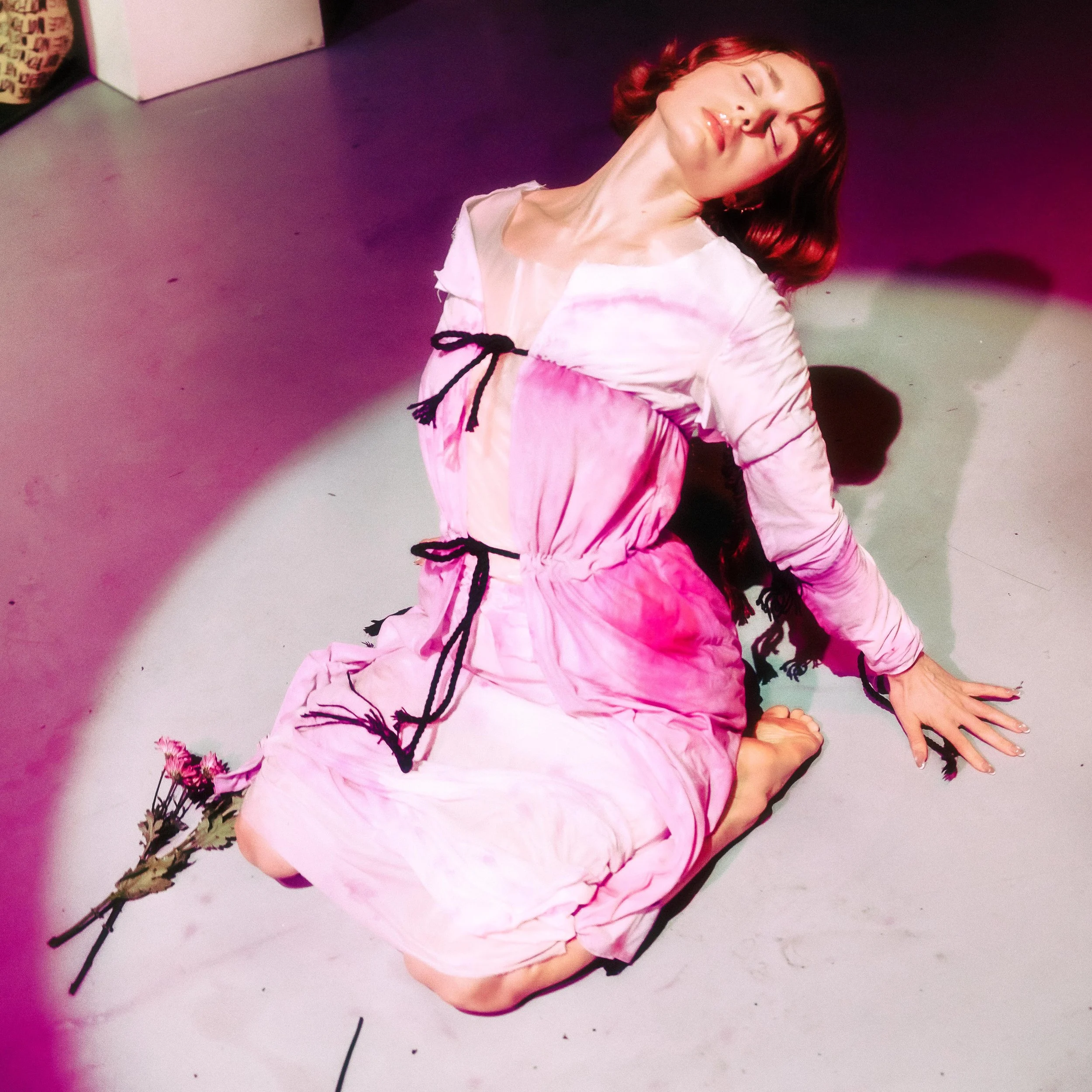
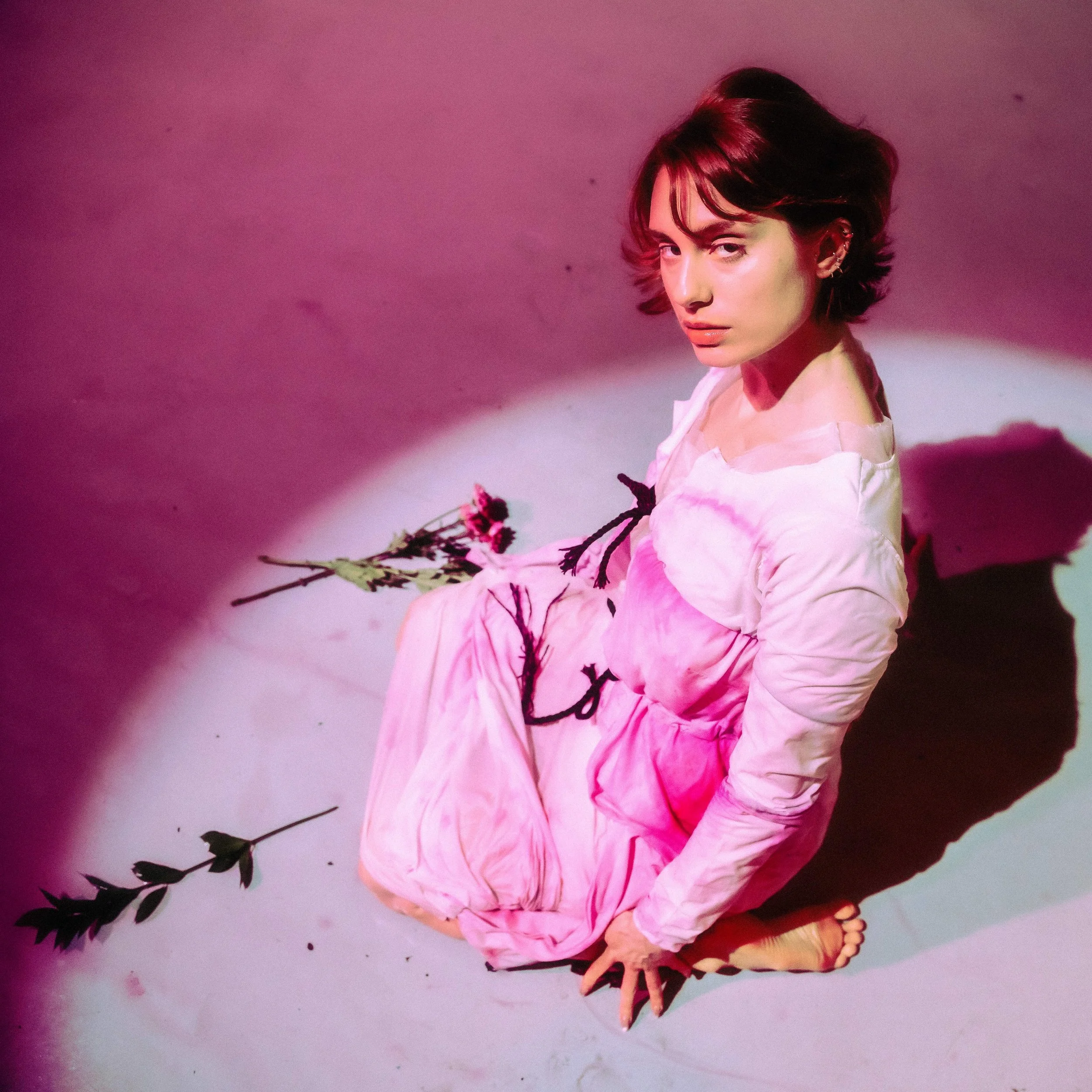
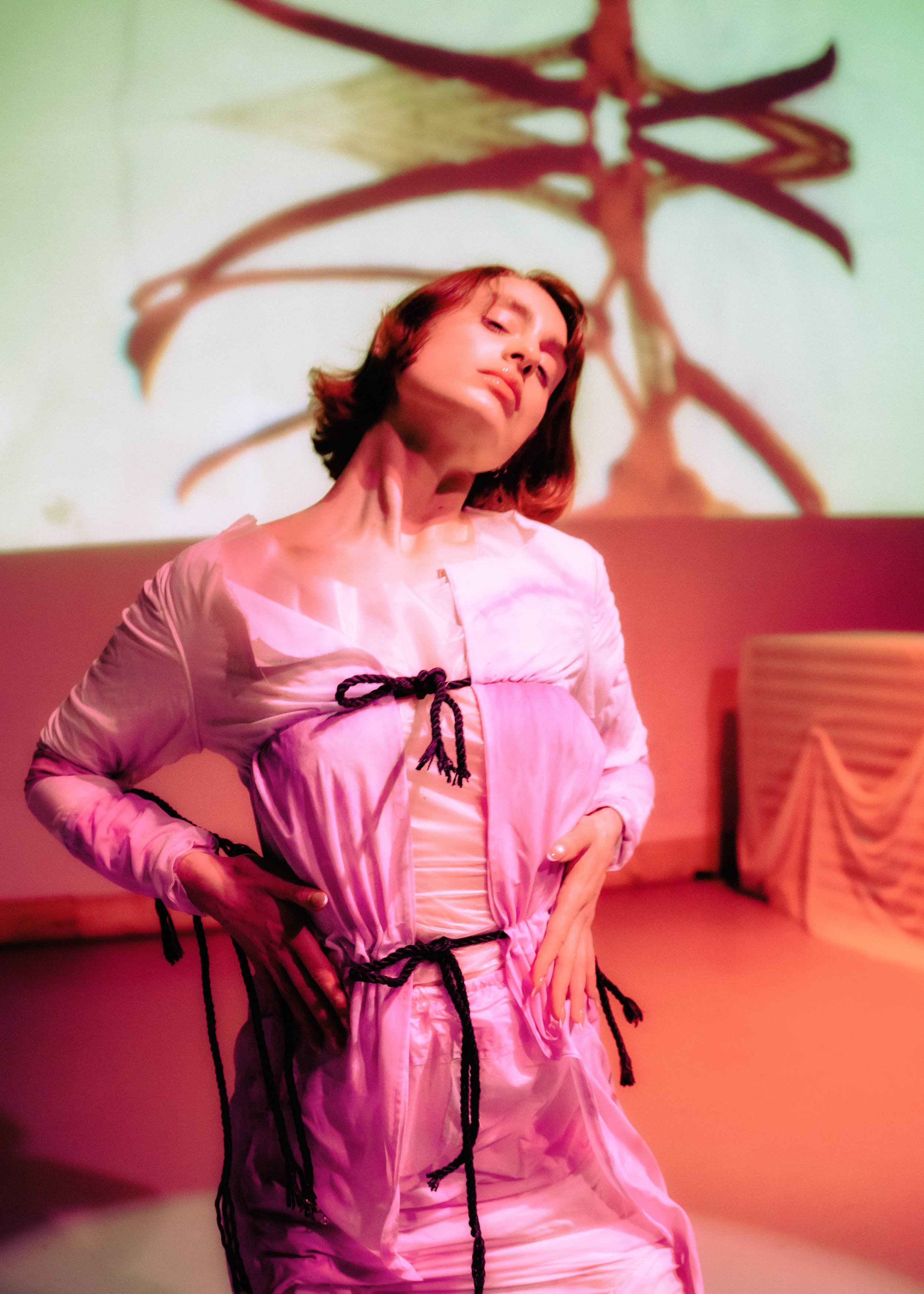
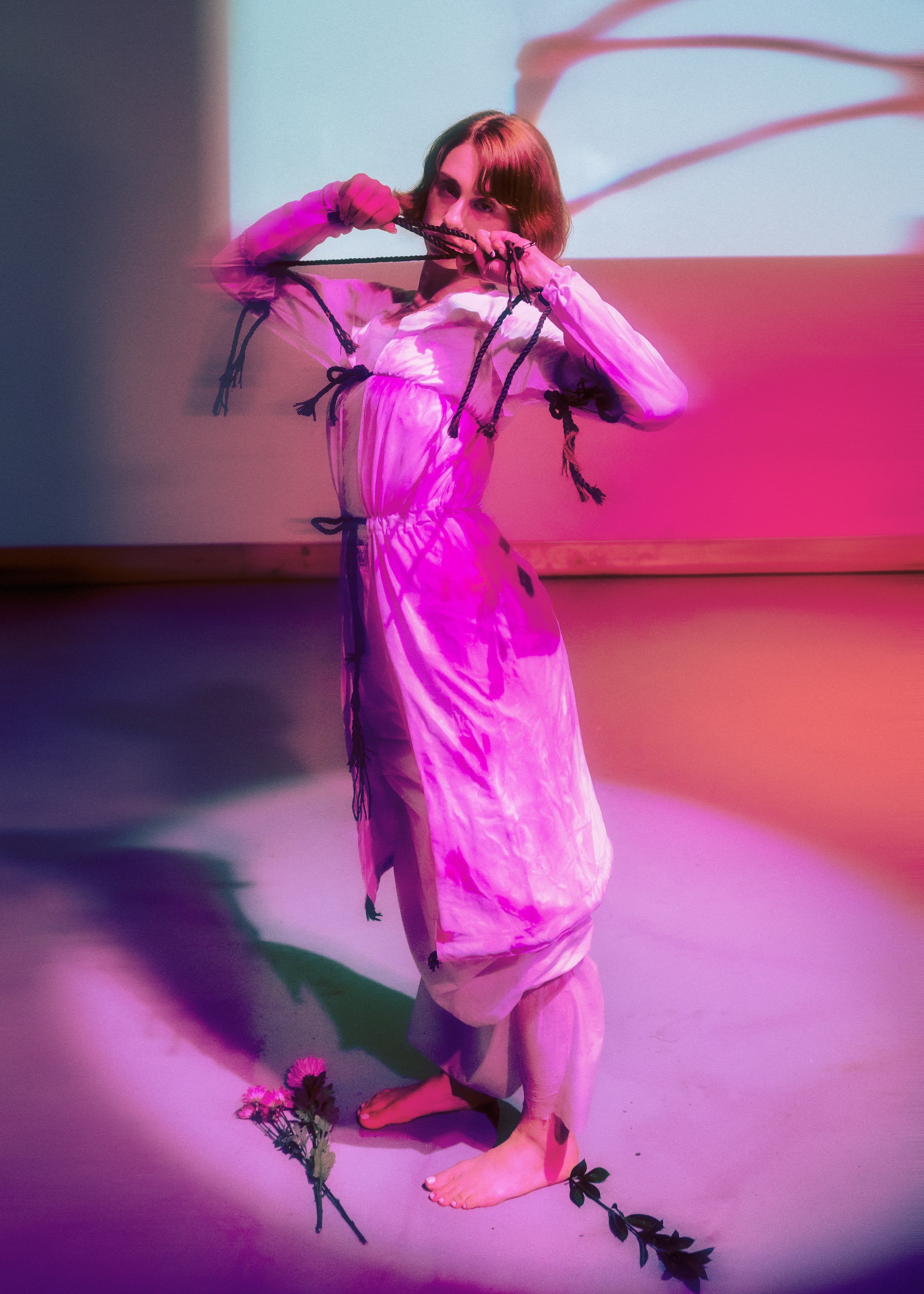
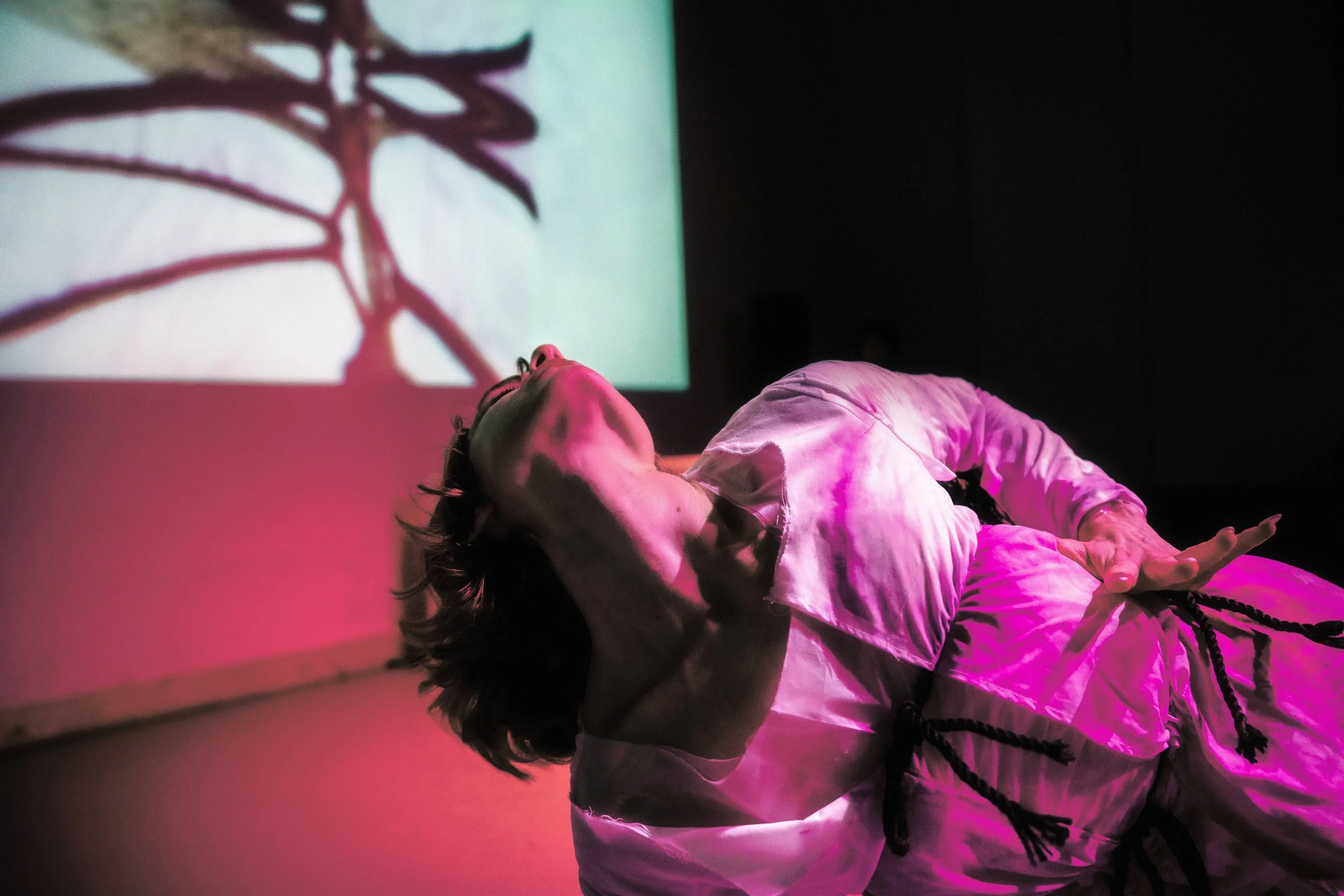
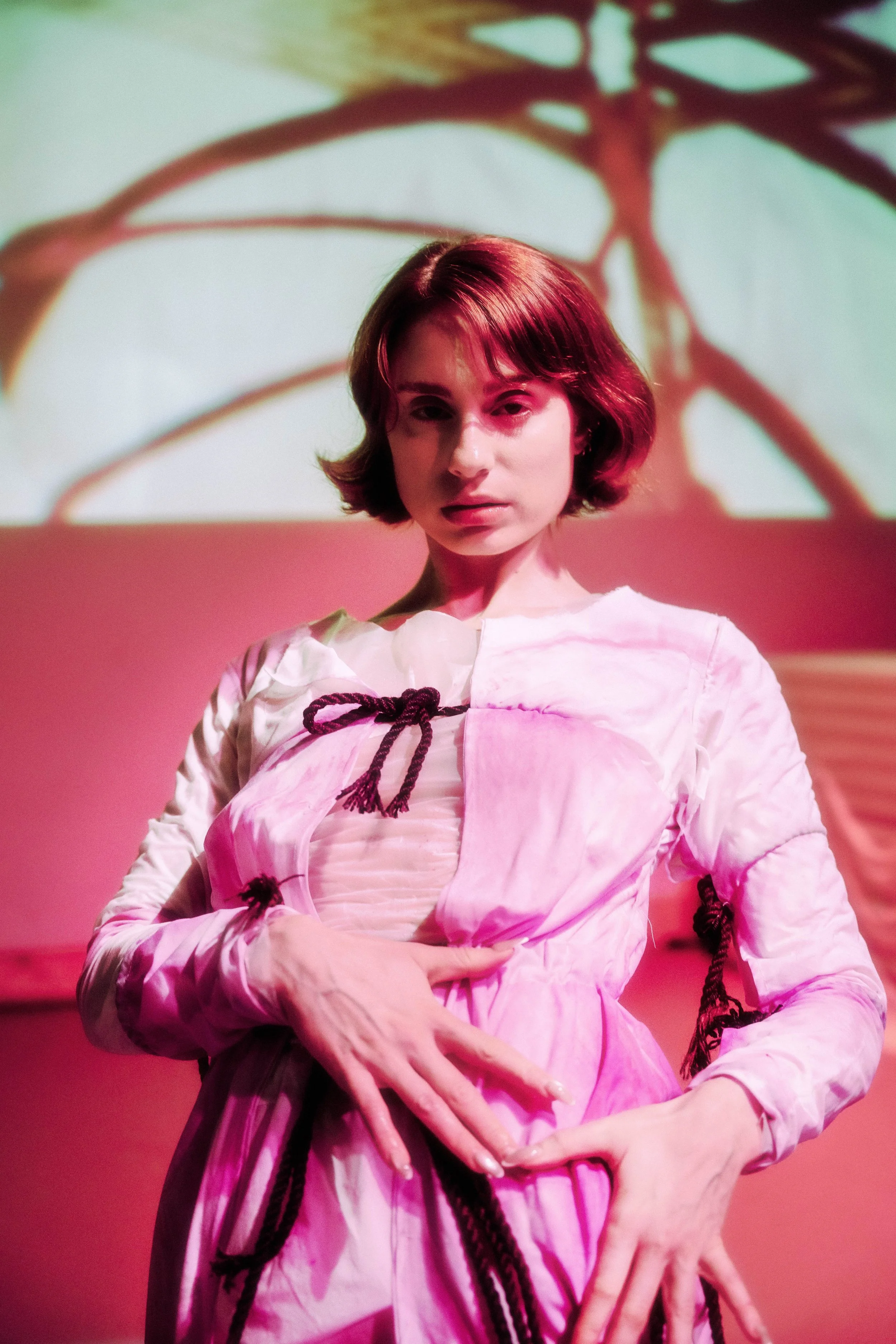
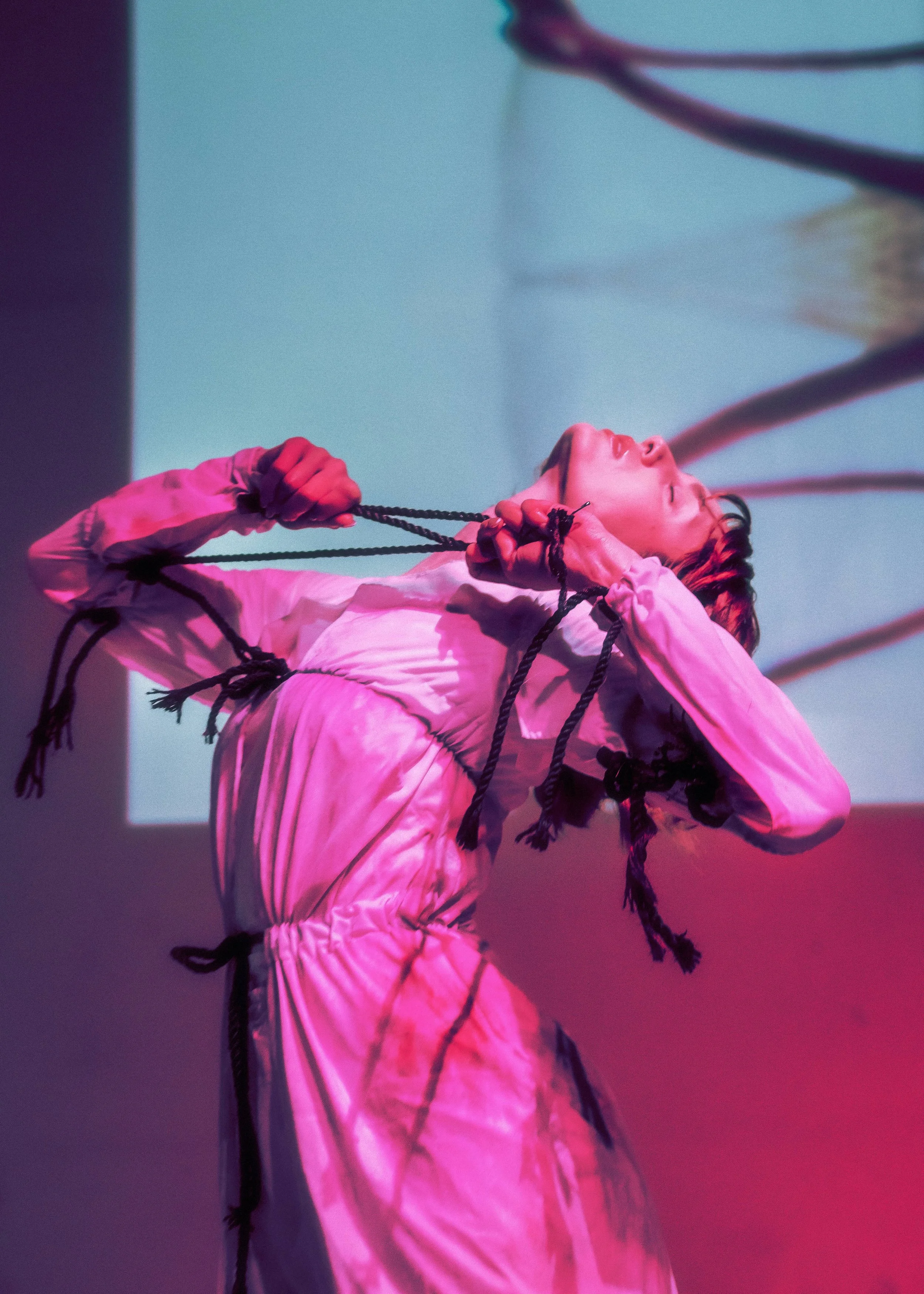
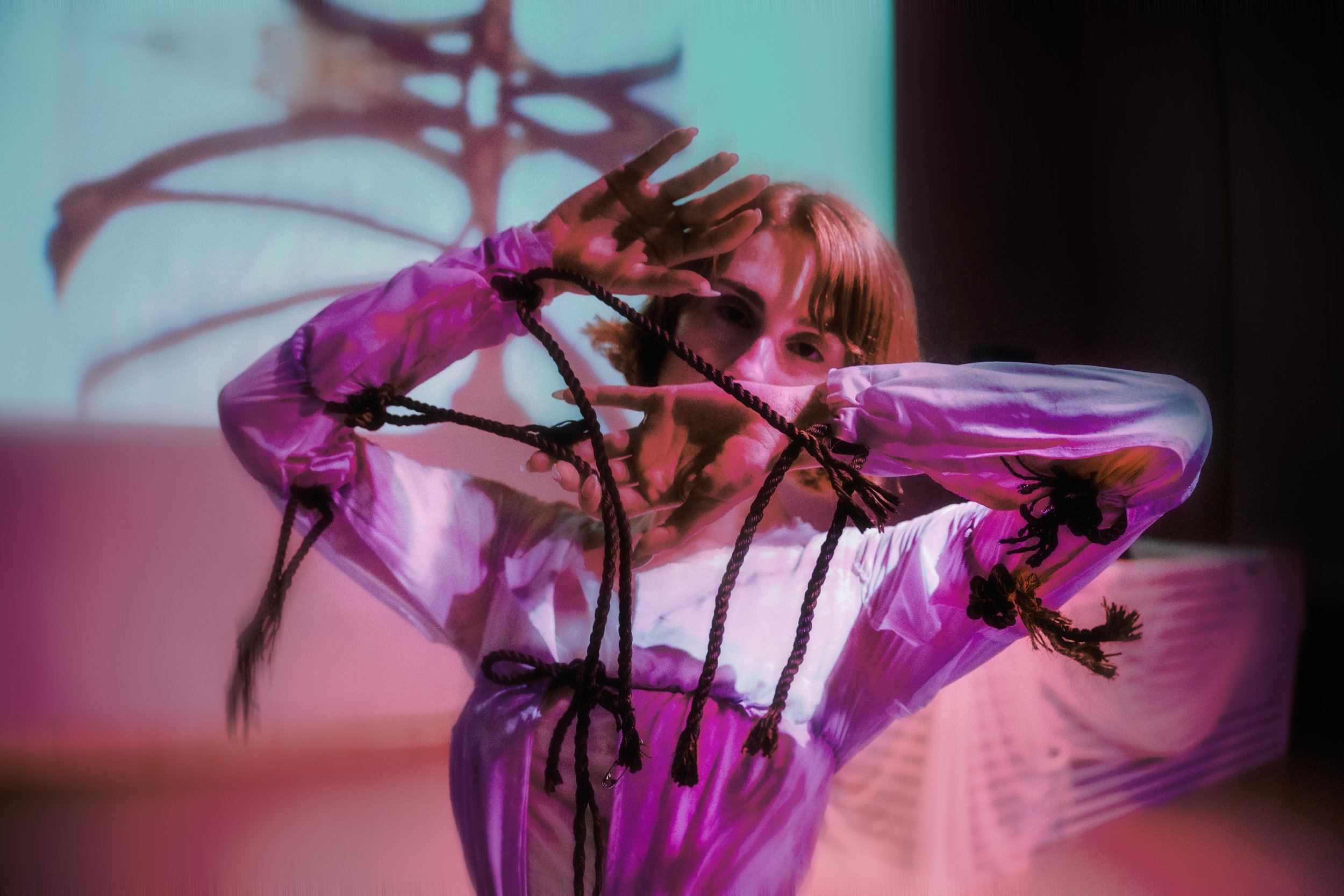
This show centered around a dye performance, part of an evolving practice of dye-while-wearing pieces for hsk, and featured 13 looks created using dead stock and upcycled materials. The work sits at a charged moment in fashion's political and cultural history. We are living through a deep contradiction: an era that has never been more aware of the affects of hyperconsumption, yet one in which the mechanisms driving it have only accelerated. Distressed, worn, stained, faded: the visual language of use has become desirable. What was once stigmatized as worn-out is now celebrated as evidence of an authentic, experienced life. The aesthetic of a life lived in clothing has become another product to be purchased, bypassing lived experience entirely. This is the contradiction the work inhabits.
shot and filmed by Loicia Samson
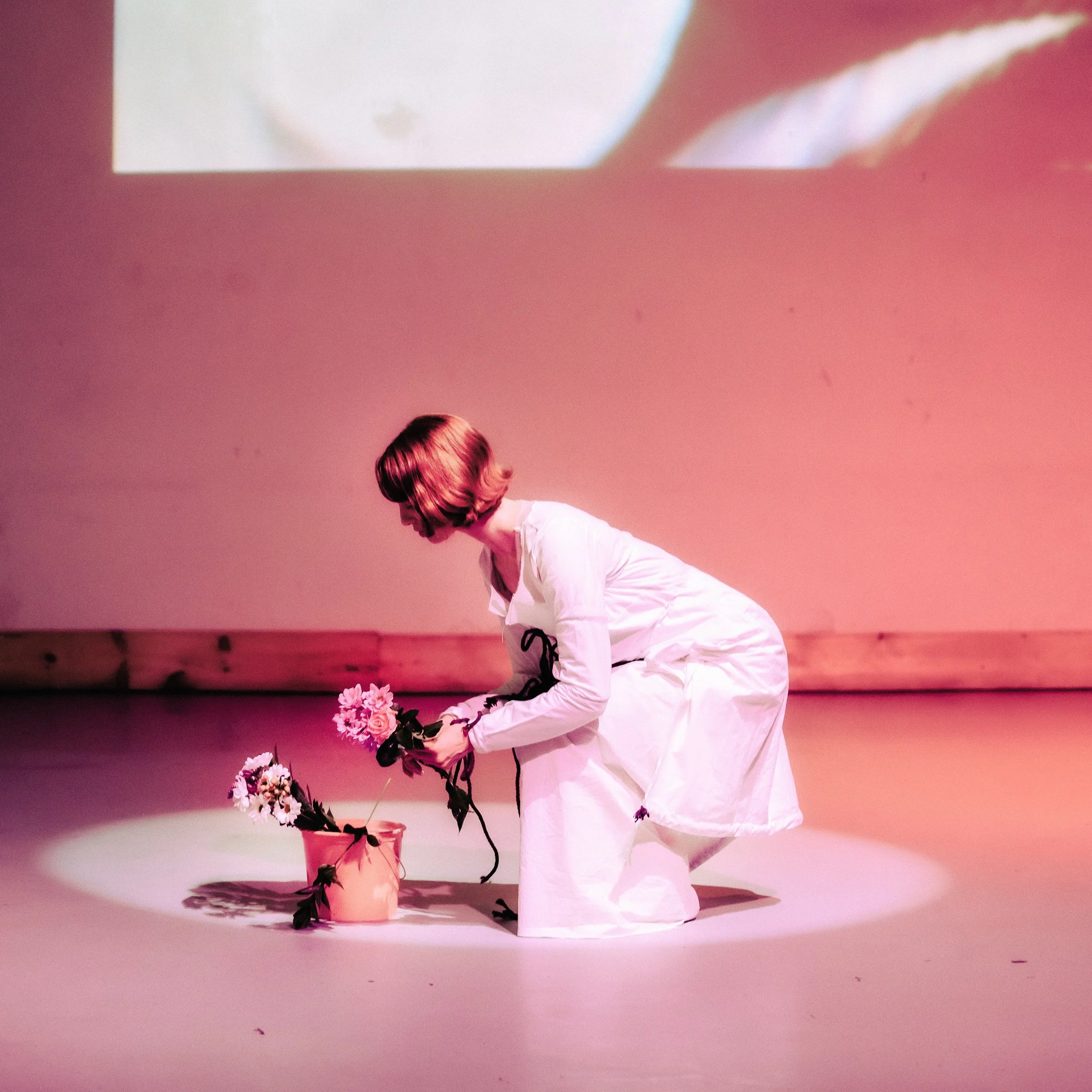
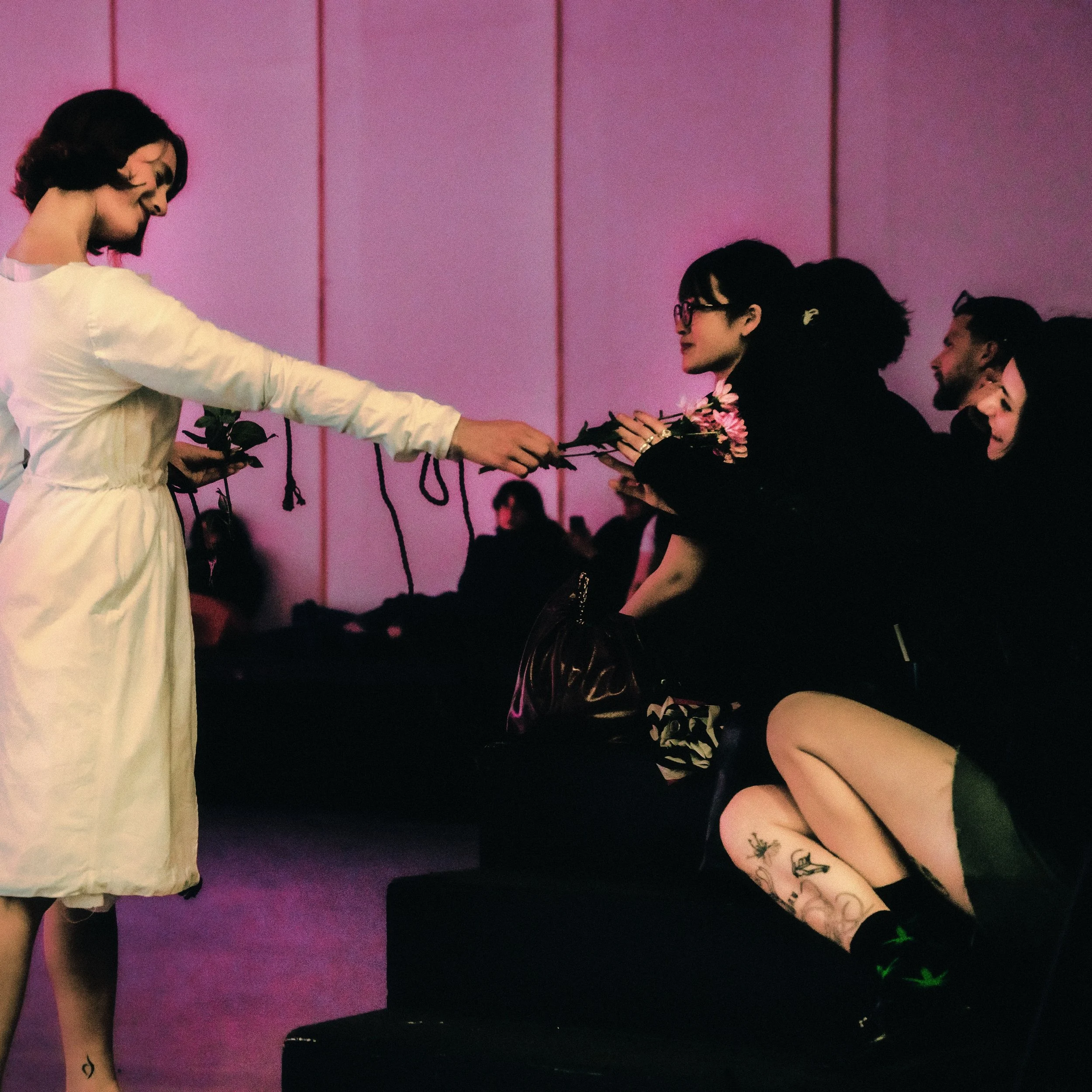
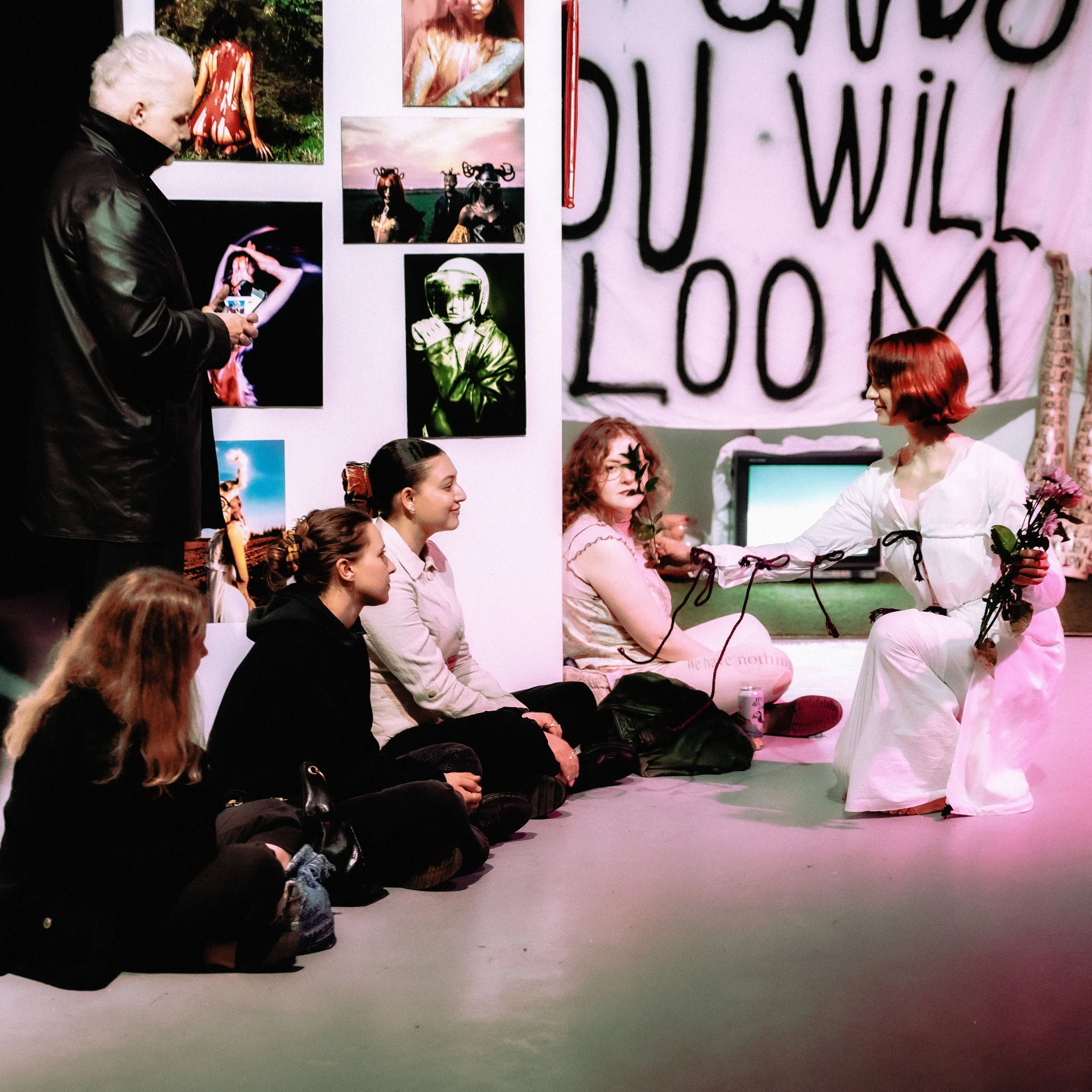
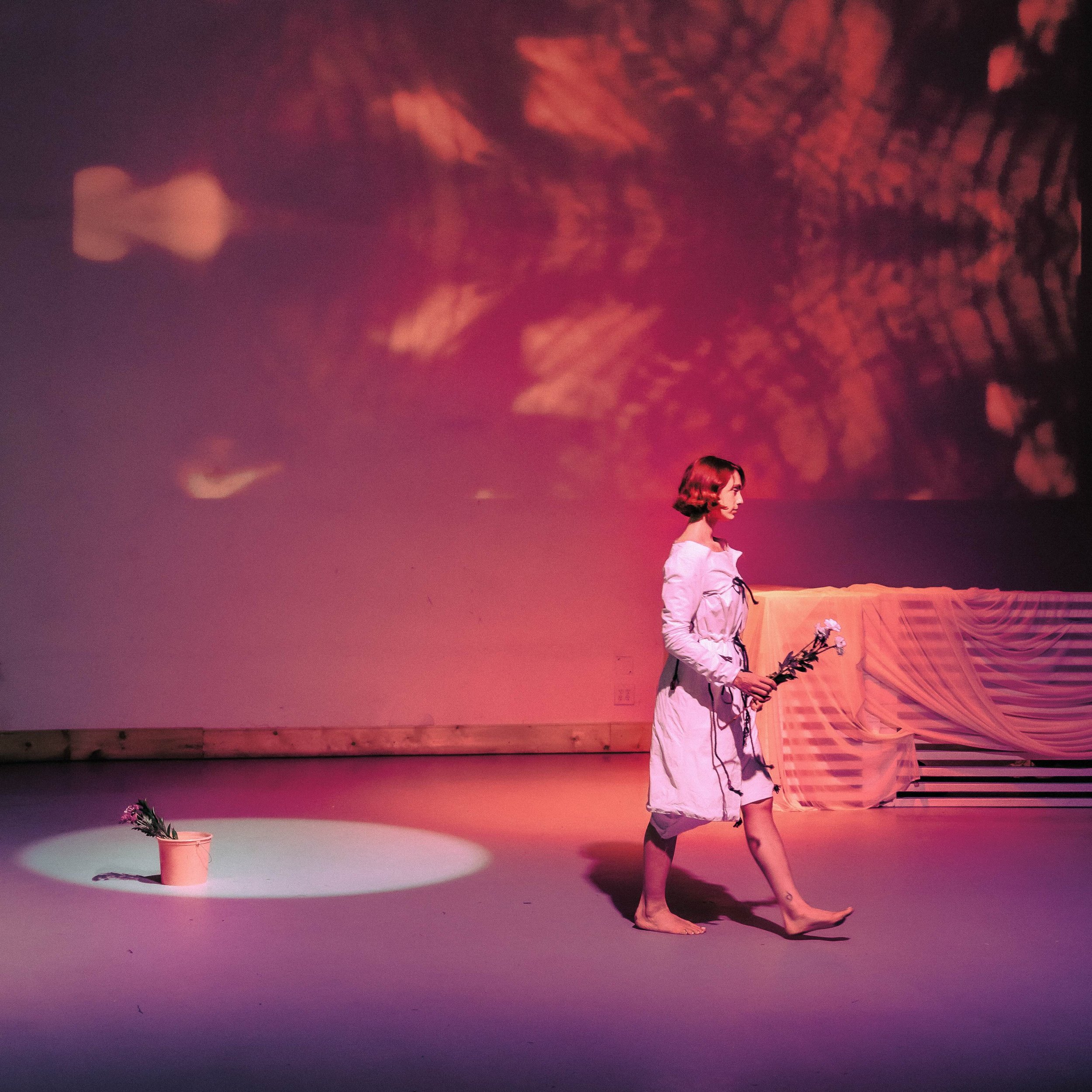
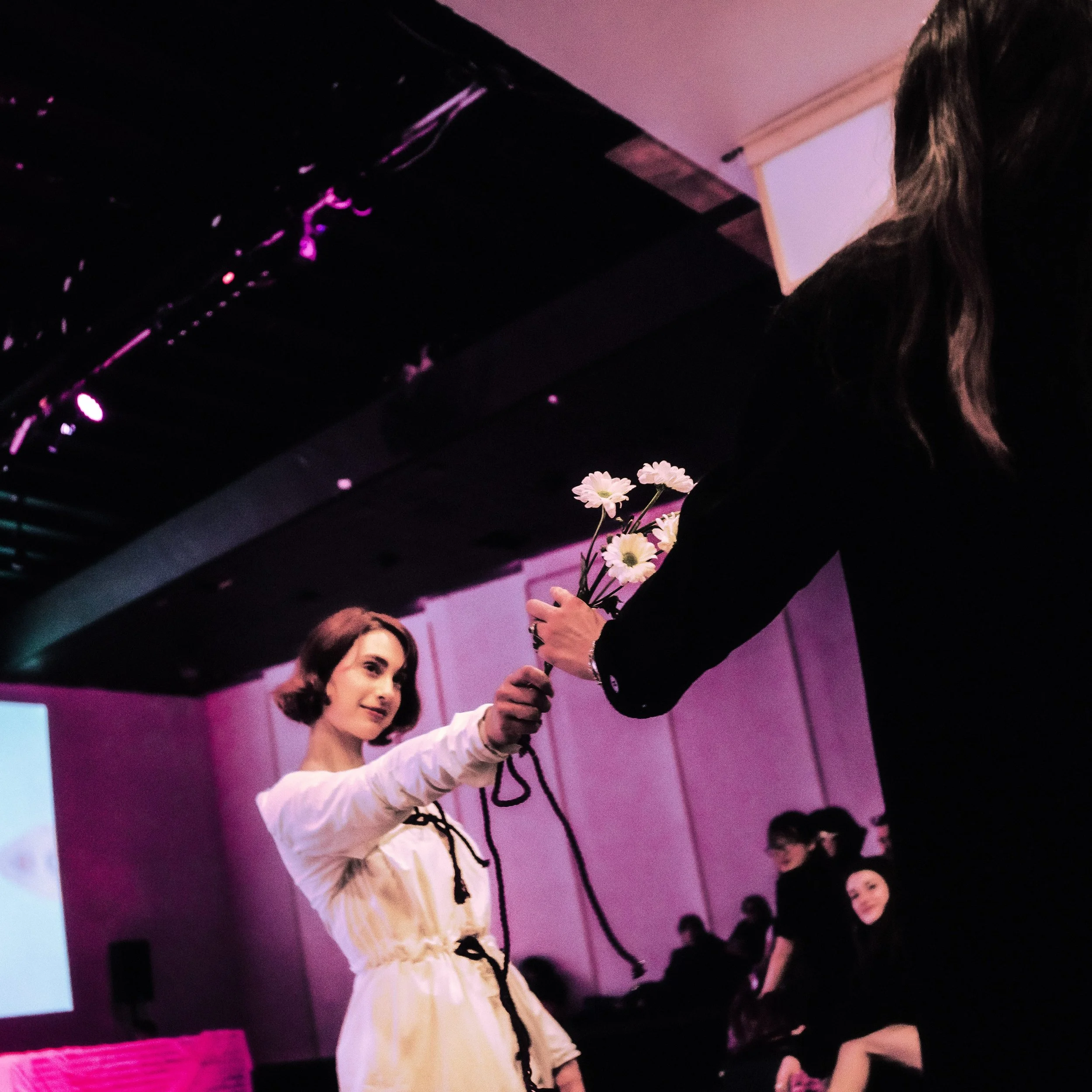
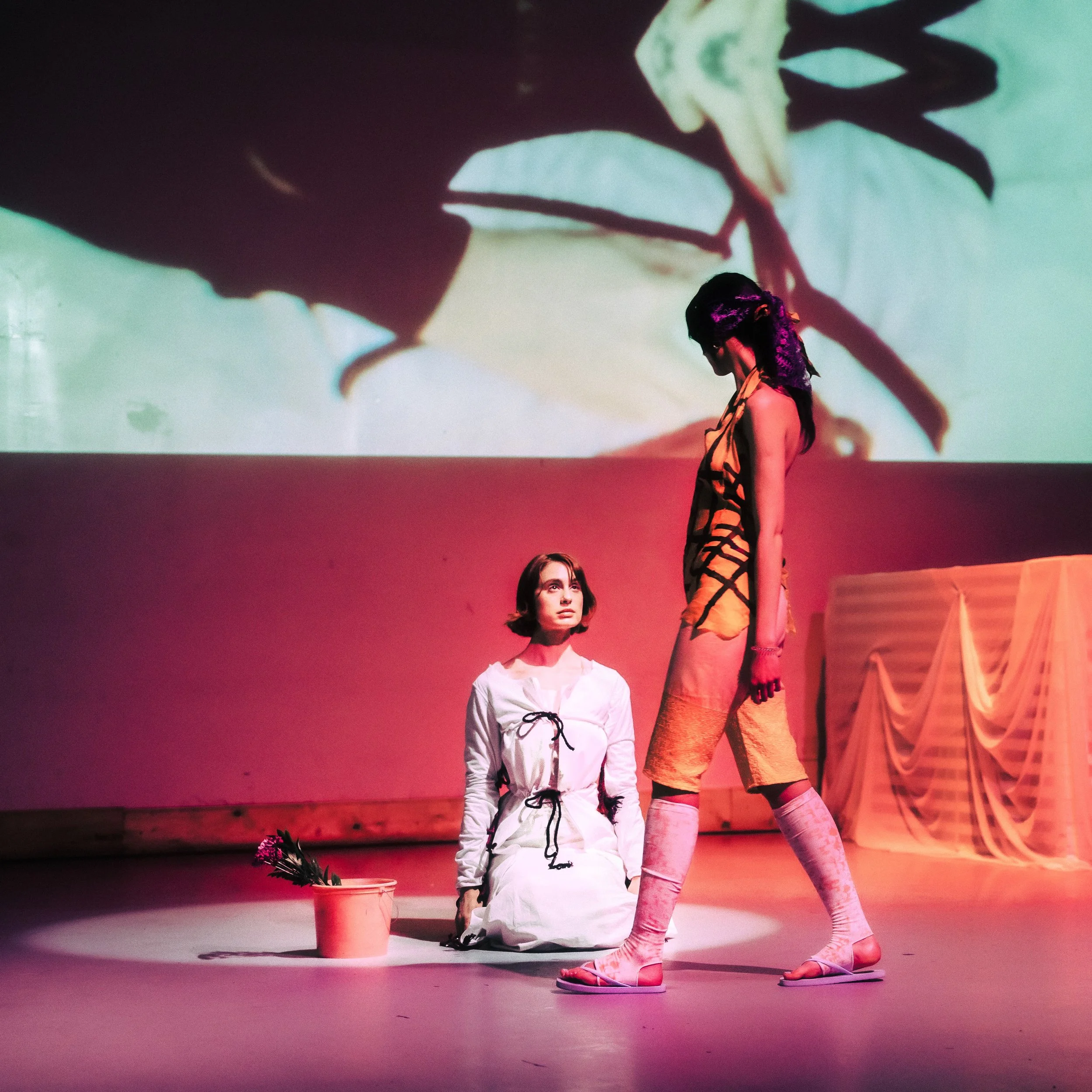
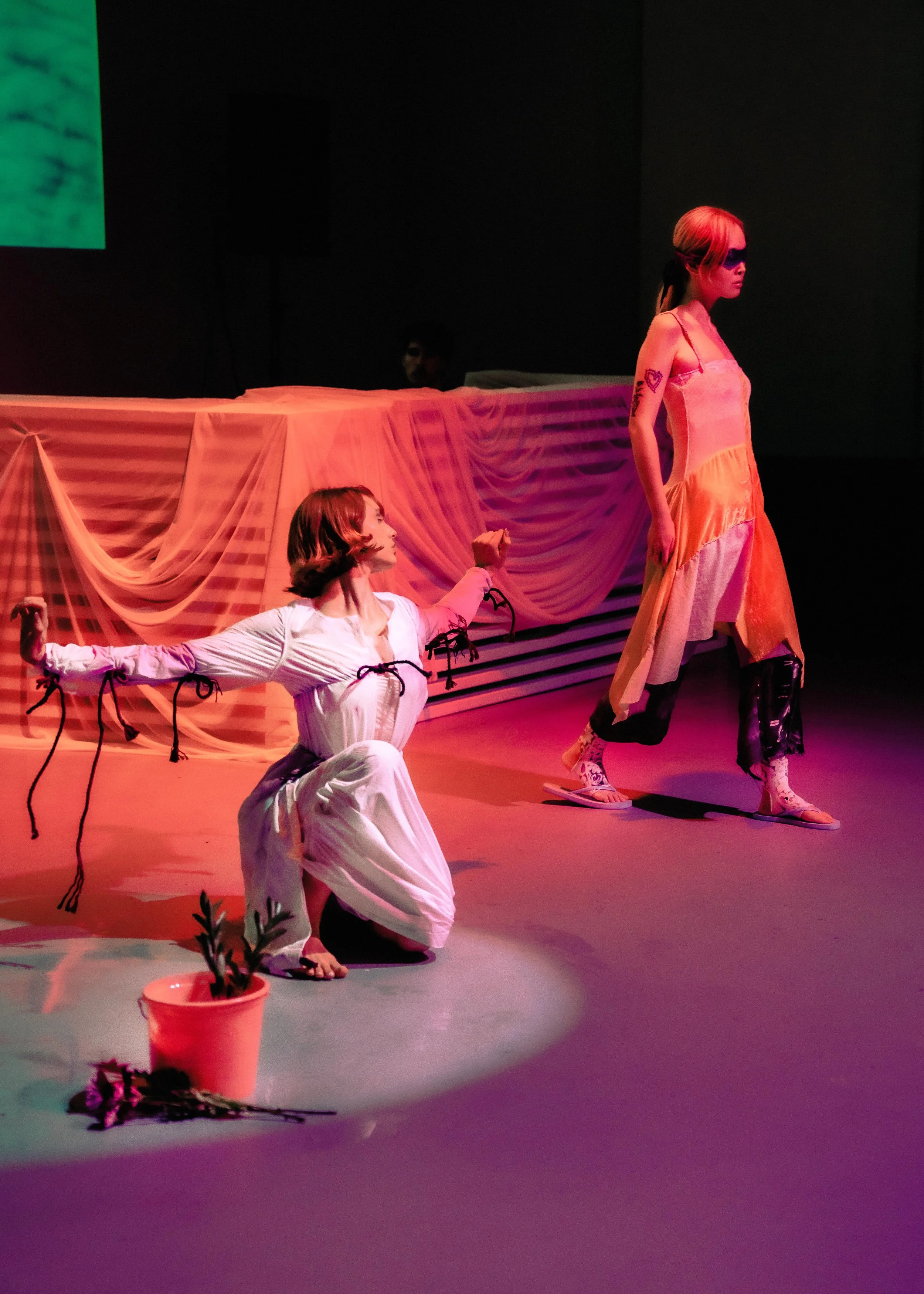
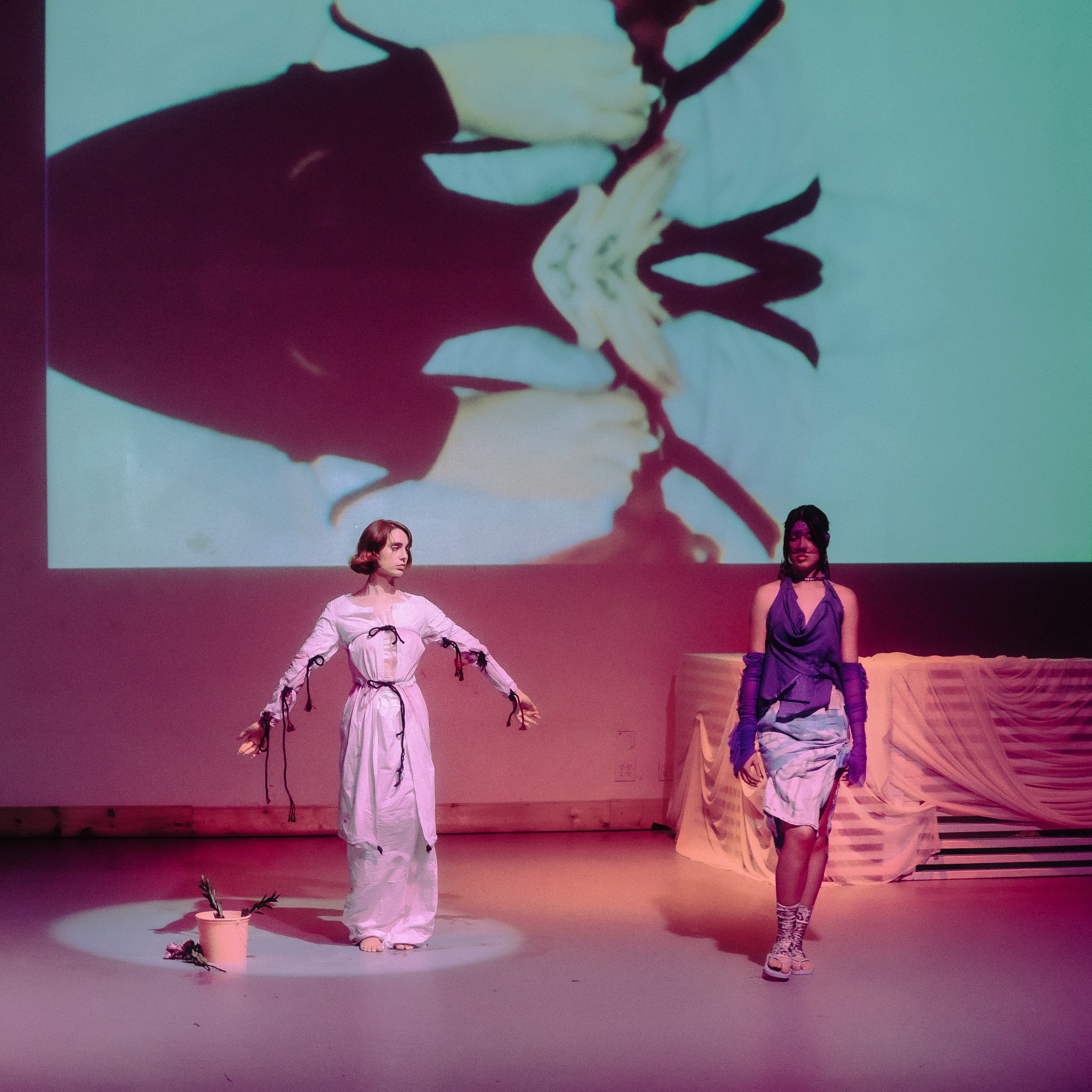
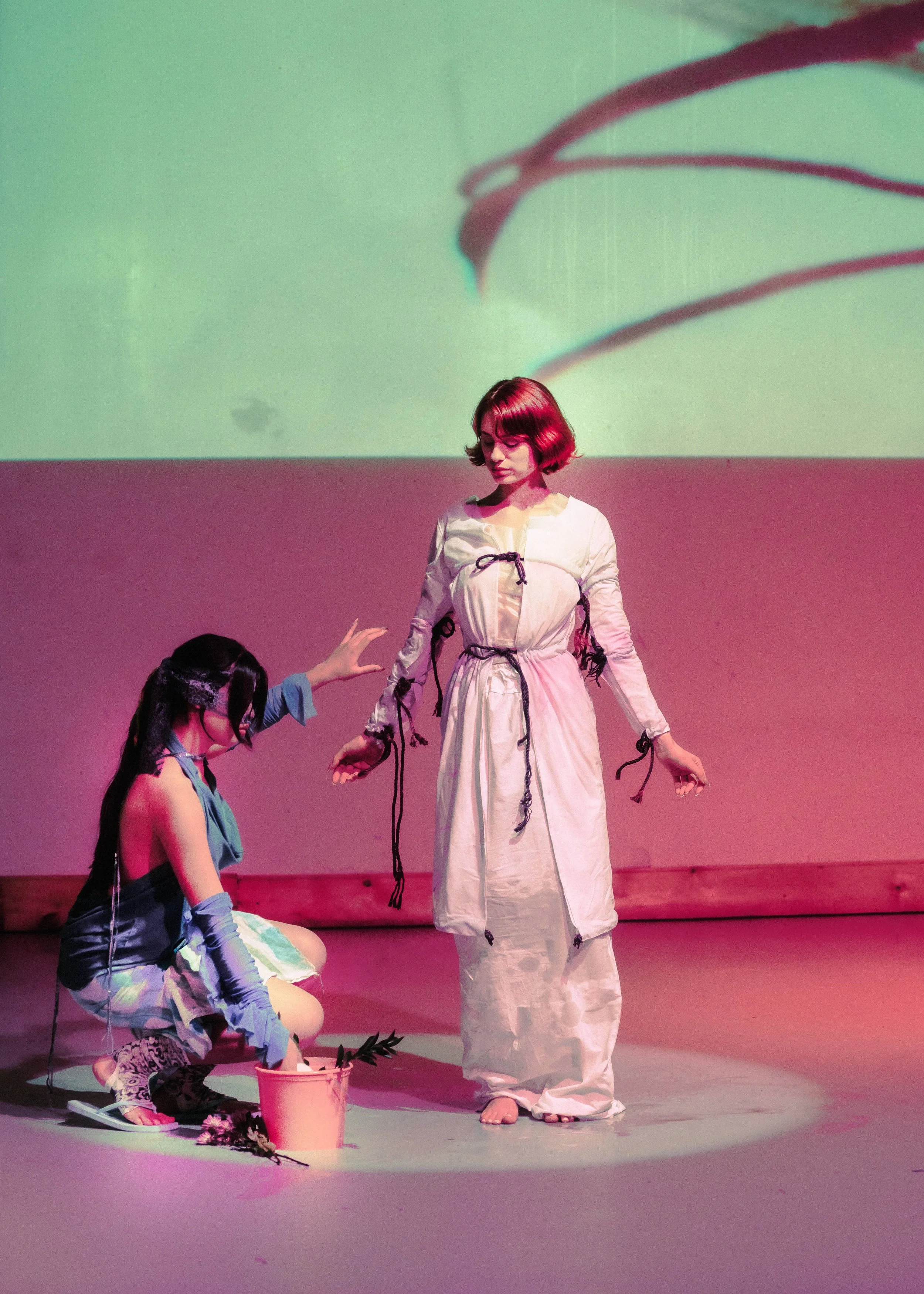
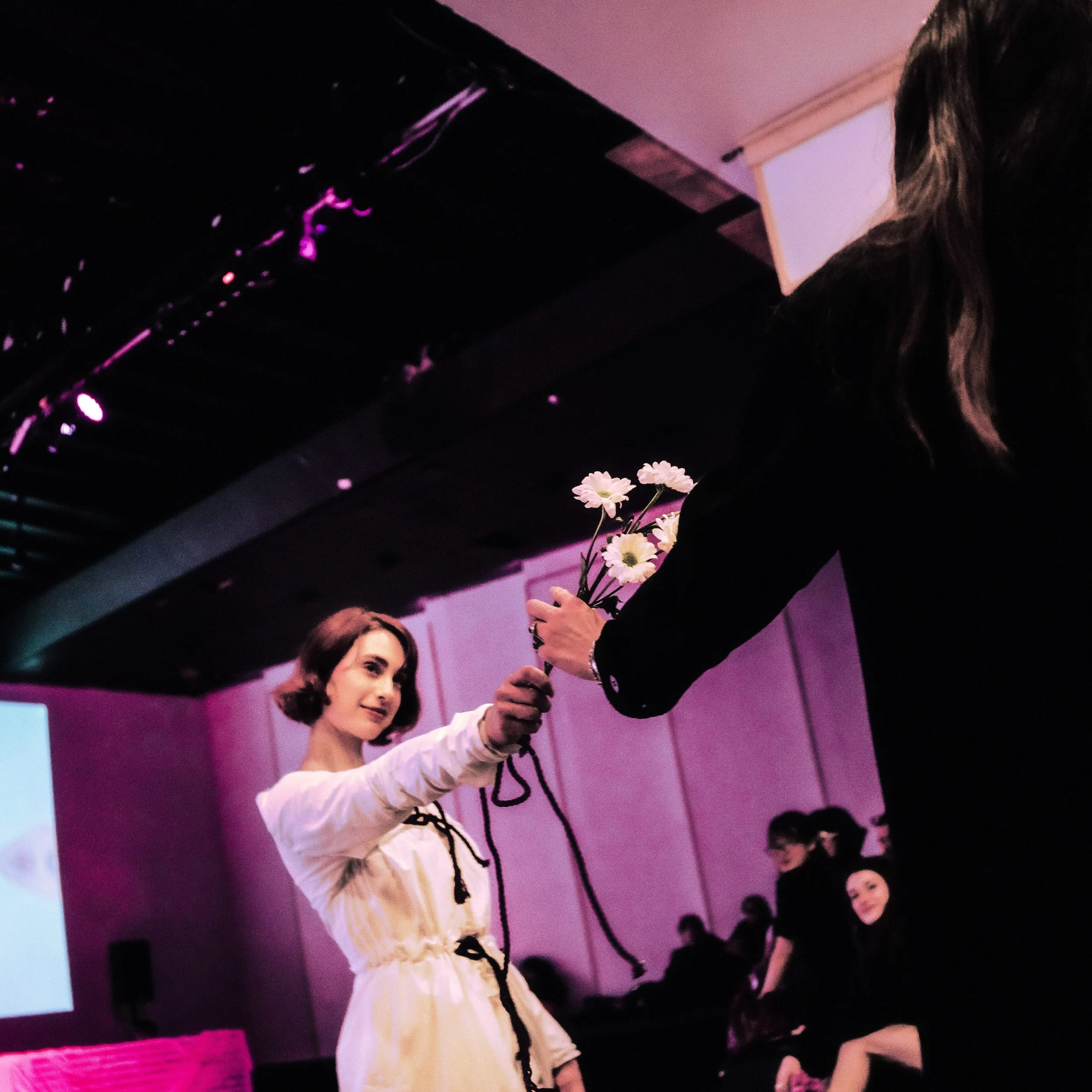
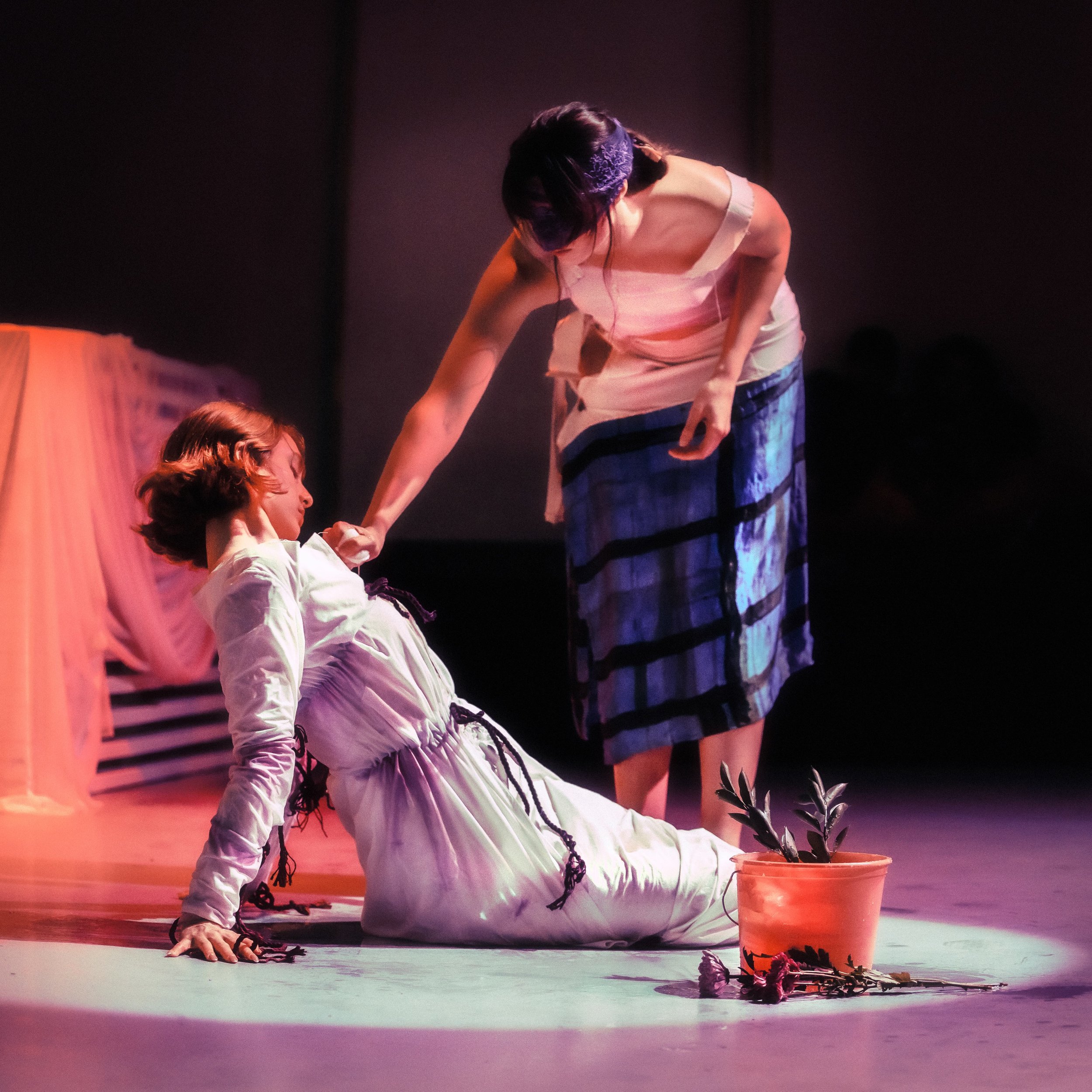
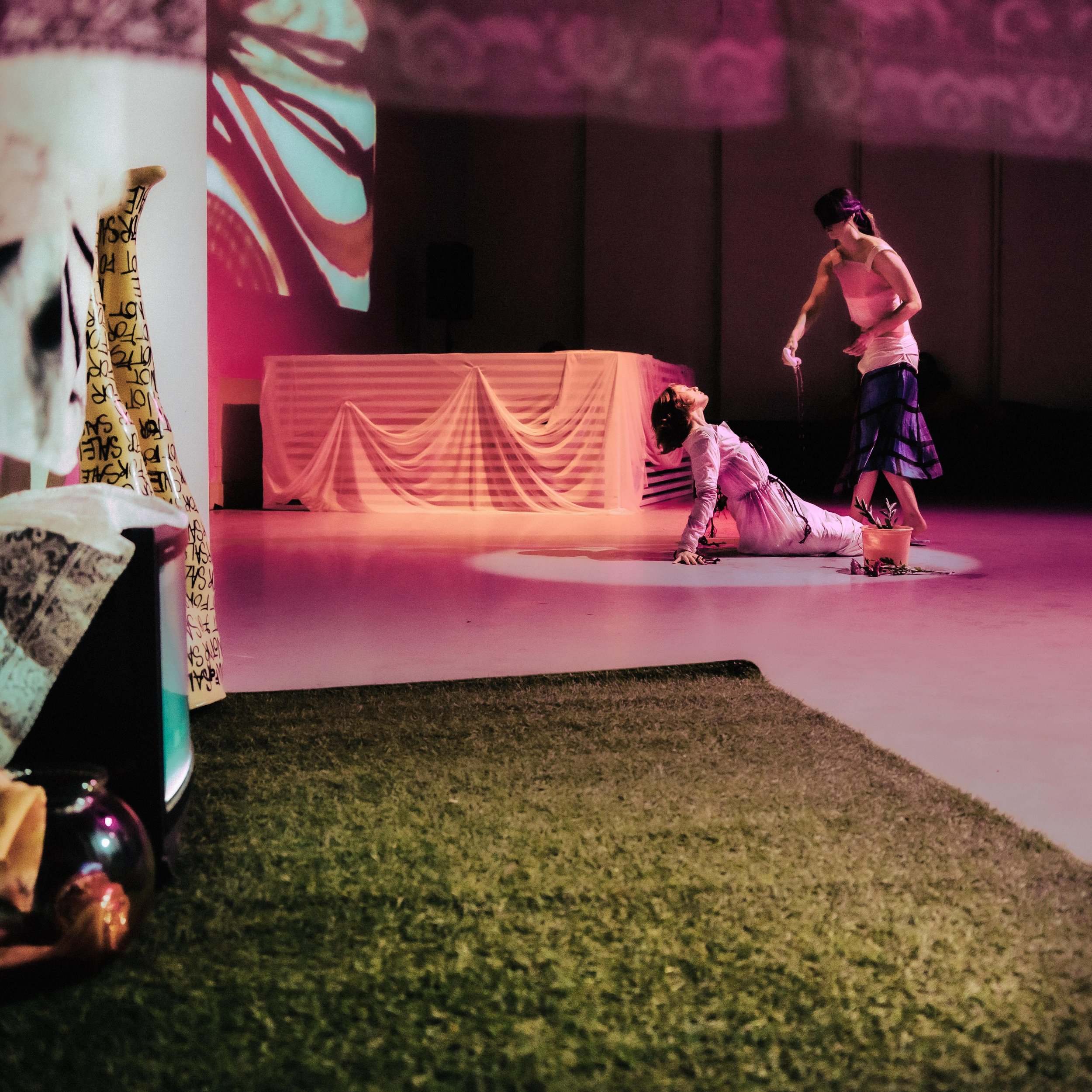
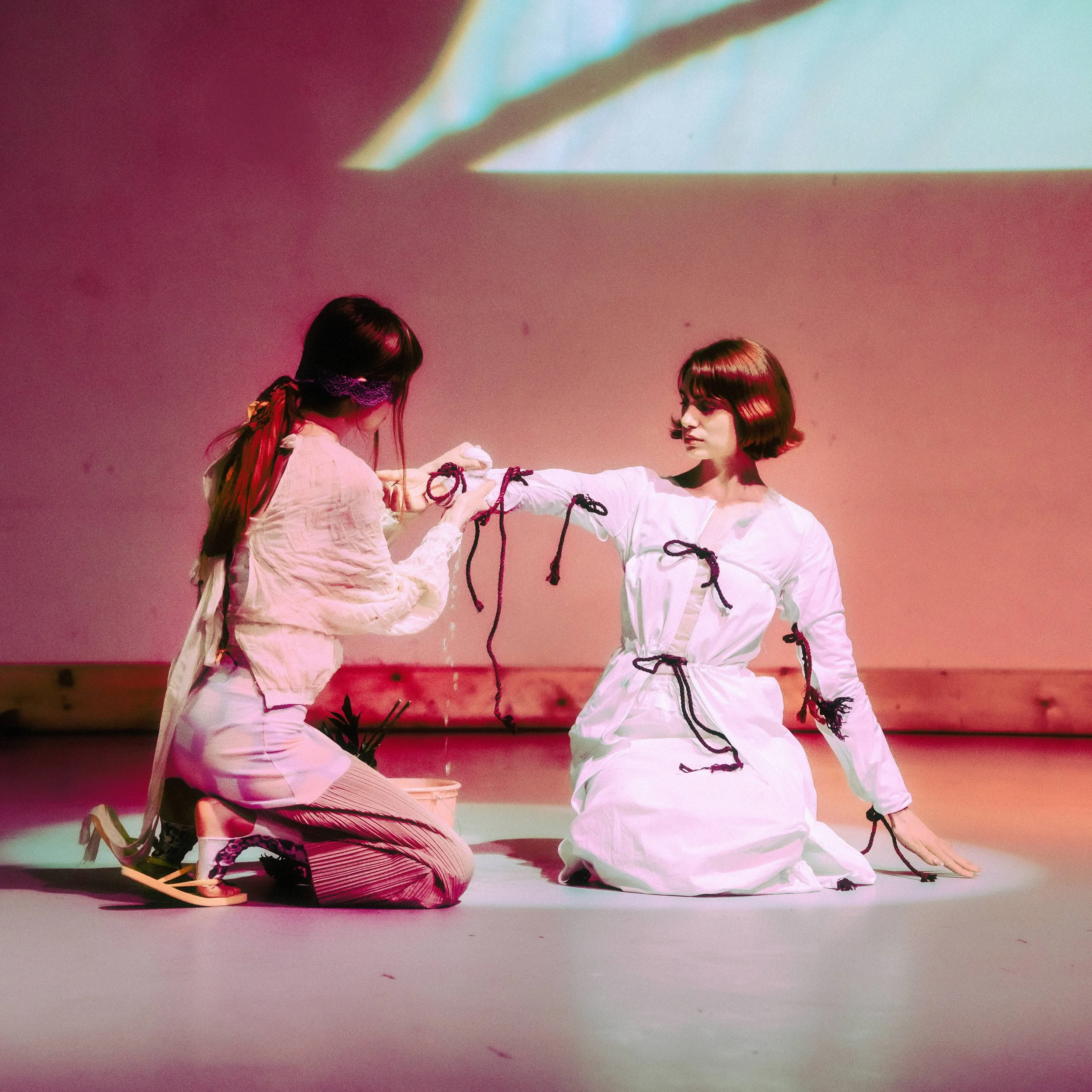
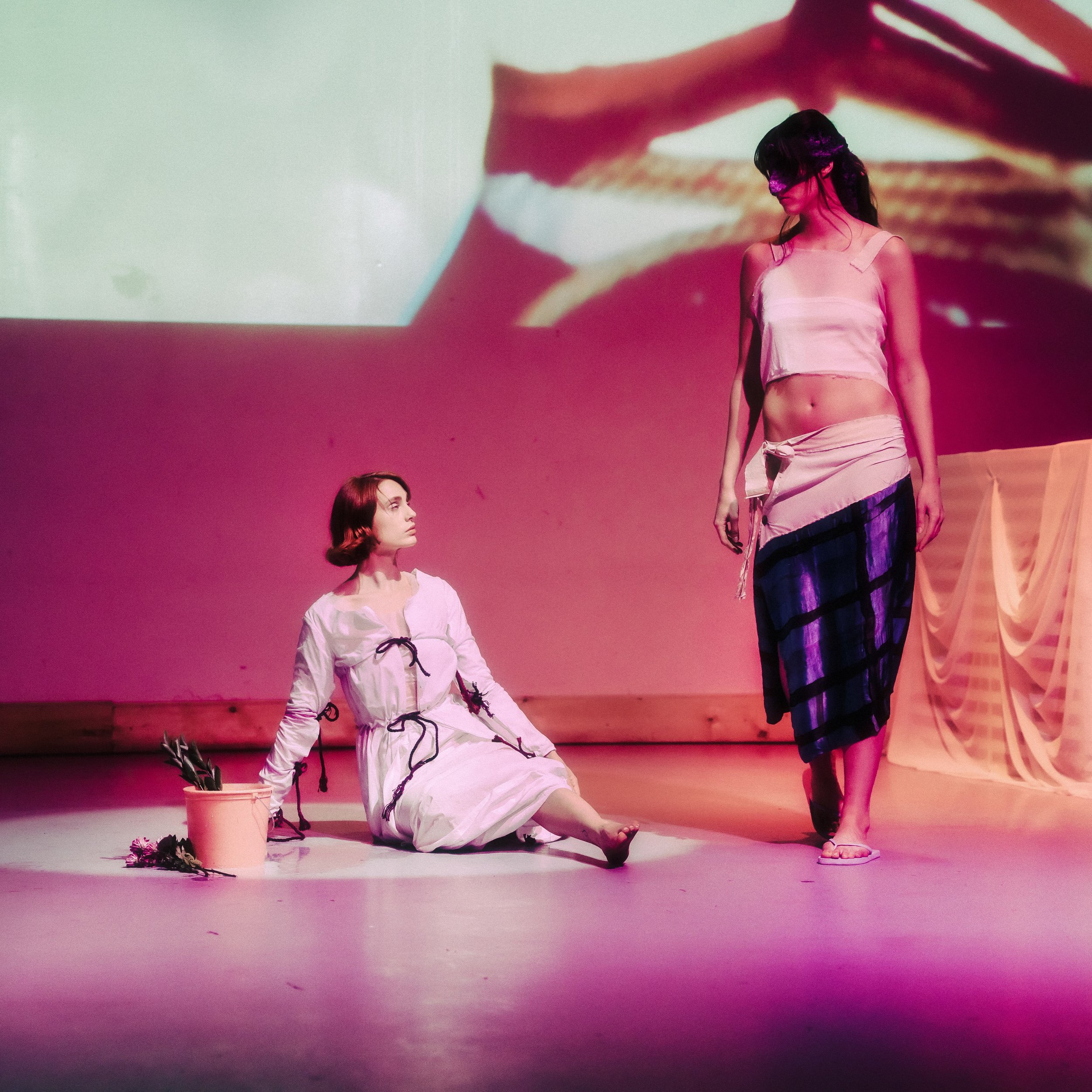
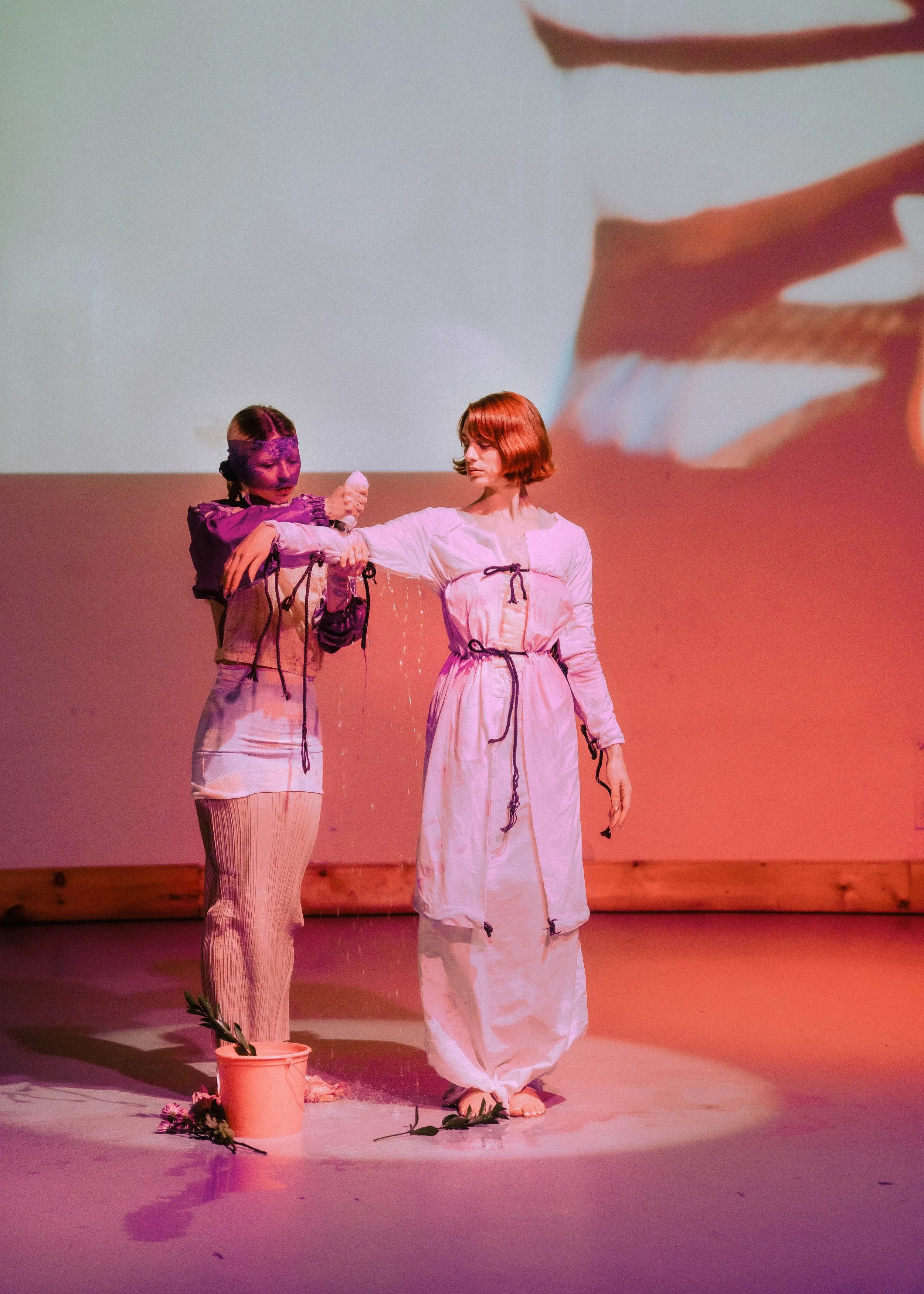
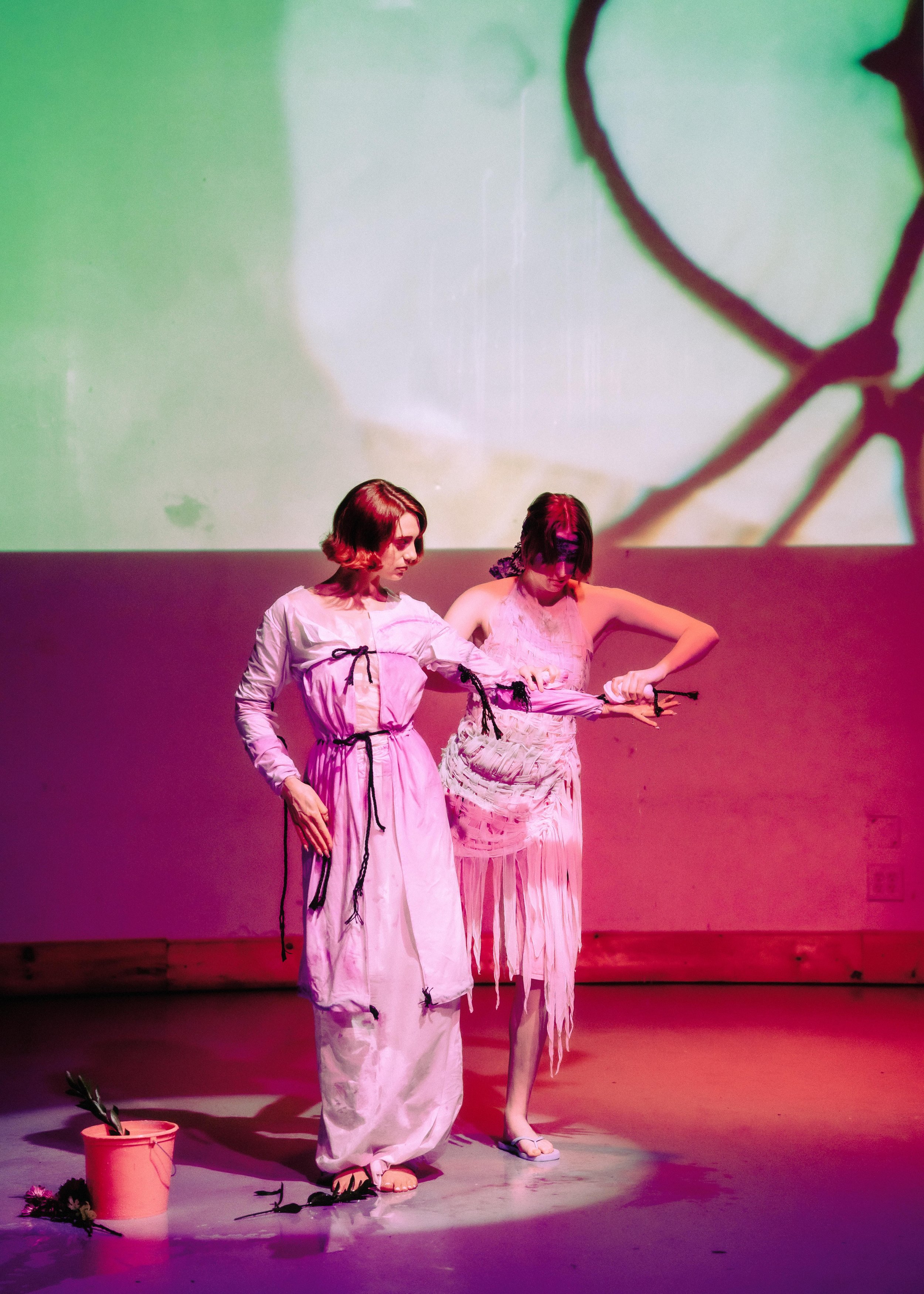
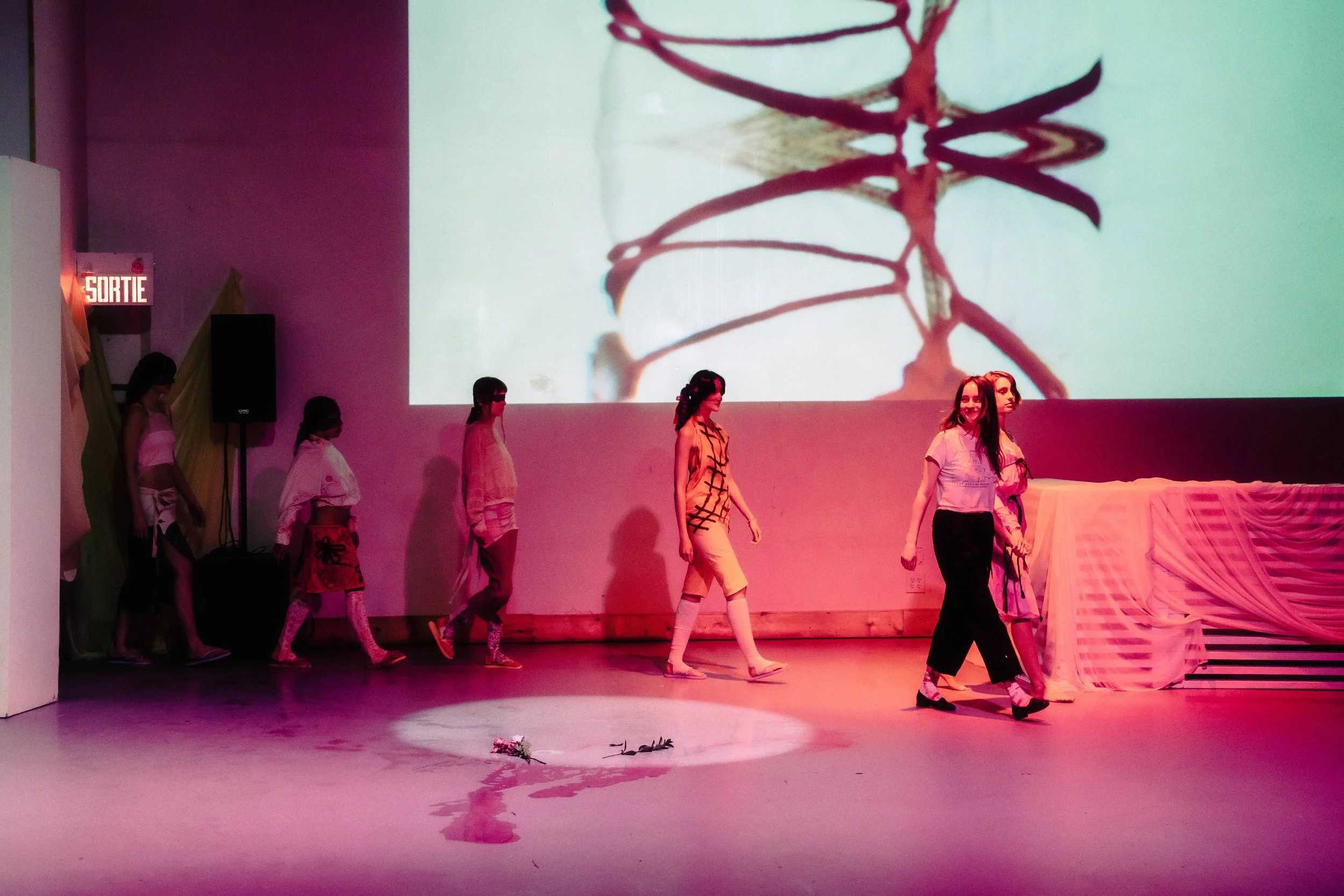
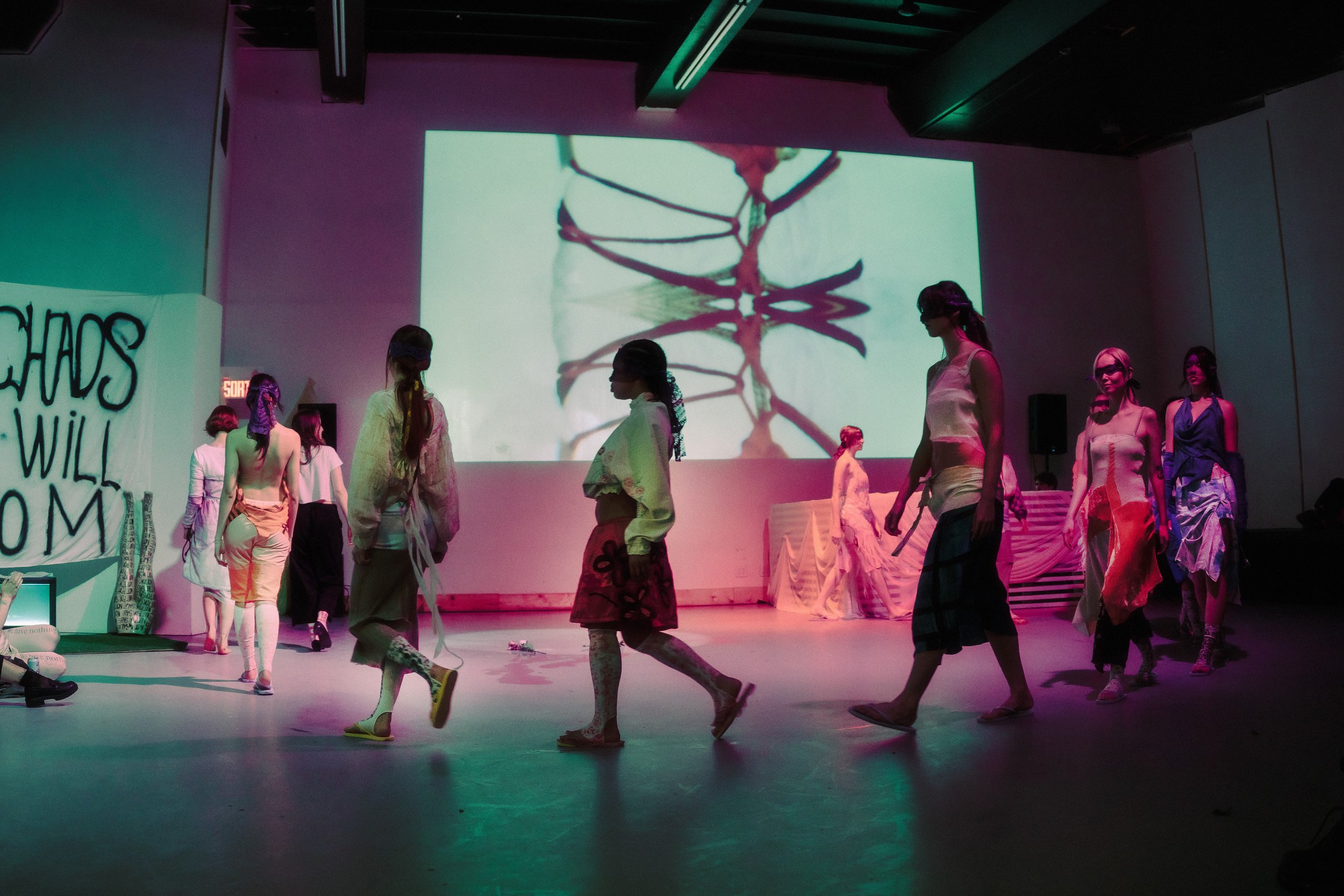
This project brought together several key aspects of my practice: the construction of intricate linework as architectural form, the utilization and amplification of deadstock and upcycled fabrics, the use of water as a transformative element, and the intentional yet unpredictable application of dye and transformation of textile through bodily wear.Jute rope was pre-dyed in three colours. The dress was designed with a double layer so that the rope could be concealed within, woven through hidden passageways in the garment. Water was sponged onto the rope, activating the dyes and allowing colour to slowly seep outward, staining the fabric. The rope architecture generated an exaggerated silhouette through tightening and loosening by the models — its relationship to the body acting as a resist, shaping both the movement and distribution of dye. The dress at the centre of this performance was made from deadstock cotton found at a thrift store; fabric that had already circulated through and been discarded by the very system it critiques. Through the performance, it accumulates stain, pressure, and record. The dye seeps outward from rope soaked with water, pulled and directed. The other models tightening the rope, each gesture of the models, each moment of contact between body and wet fibre leaves a mark that cannot be undone or replicated. The garment becomes a document. Where hyperconsumption produces objects engineered to be identical, interchangeable, and expendable, this work produces a singular object whose meaning is inseparable from its history of use. The staining is not applied to simulate experience — it is experience, accumulated in real time, witnessed by an audience. The body functions as a resist against the dye-soaked ropes, directing and interrupting the flow of pigment. The transformation unfolds in real time, allowing the audience to witness the emergence of the work as a live event rather than a fixed object. The gradual changing of the dress emphasizes the temporality of the performance and foregrounds the act of witnessing as an essential component of the work — a counterpoint to the speed, anonymity, and disposability that define the current conditions of fashion's making and unmaking.